Traveling by Air with Pets
As members of the family, more and more pets travel by air. In recent years, traveling with dogs, cats and other pets has become increasingly common for a growing number of people. This is reflected in the way airlines and airports such as Tijuana have adapted their pet policies. Today, practically all airlines offer pet transport, either in the cargo hold or in the passenger cabin. Below are some basic tips for traveling with your pet. Keep in mind that you should always check the specific requirements with your airline, as they may vary depending on your pet’s species, the airline, your destination, the animal’s size, breed and health, as well as its vaccination and health records.
Pets Traveling in the Cargo Hold
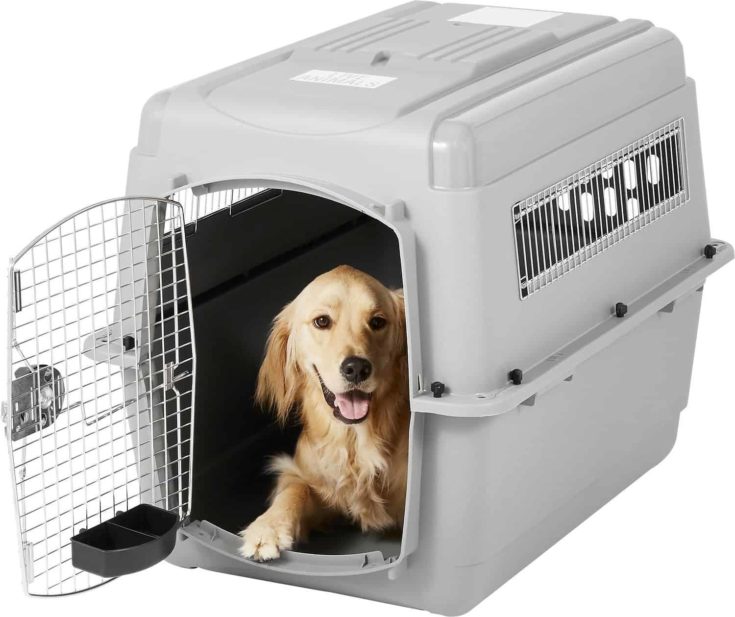
Pets that are too large to fit in a carrier that fits under the seat are usually transported in the aircraft’s cargo hold. To use this service, airlines usually require, in addition to all health and vaccination requirements, that the animal travel in a special rigid kennel. The kennel must be large enough for the animal to stand up and turn around inside. We recommend placing absorbent material inside, securing the doors with cable ties and labeling the kennel with the owner’s details. This service has a fee, which varies from airline to airline, and is usually limited to dogs and cats; brachycephalic breeds are not accepted. Also keep in mind that there are maximum kennel dimensions, which depend on the type of aircraft operating your flight. Feed your pet moderately and make sure it relieves itself before the trip. It is also a good idea to tape a bag of food to the outside of the kennel and place a water bottle inside, so that in case of a delay you or airline staff can feed it.
Pets Traveling in the Passenger Cabin
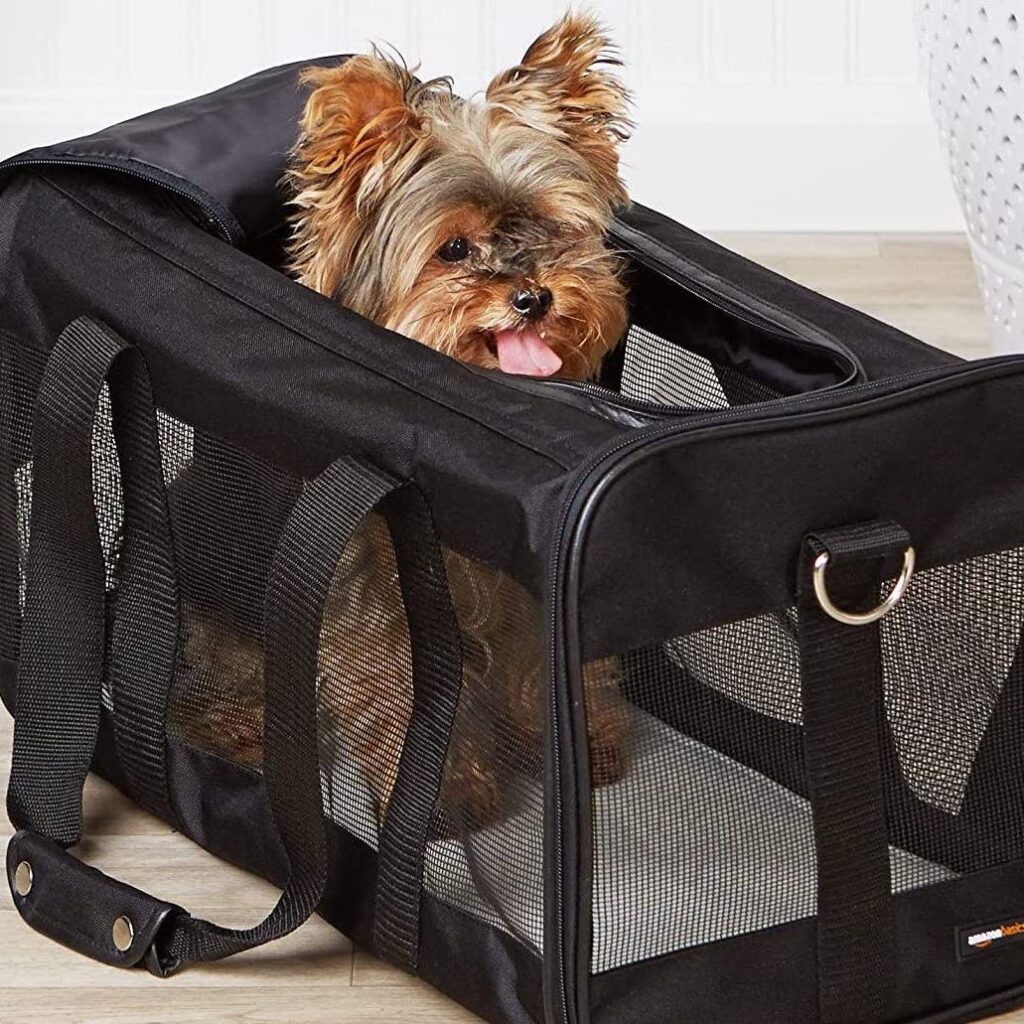
This service is limited to the smallest animals (usually only dogs and cats) that, because of their size, can travel in a carrier that must fit under the seat. During boarding, deplaning and all phases of the flight, the animal must remain inside its carrier and the carrier under the seat. The animal must also fit comfortably in the carrier, meaning it can stand up and turn around inside. It must be clean and free of bad odors, and it must behave calmly so that it is not a nuisance or a danger to other passengers.
Keep in mind that these considerations are in addition to the animal’s vaccination and health requirements. The fee for carrying a pet in the passenger cabin varies by airline.
Service Animals
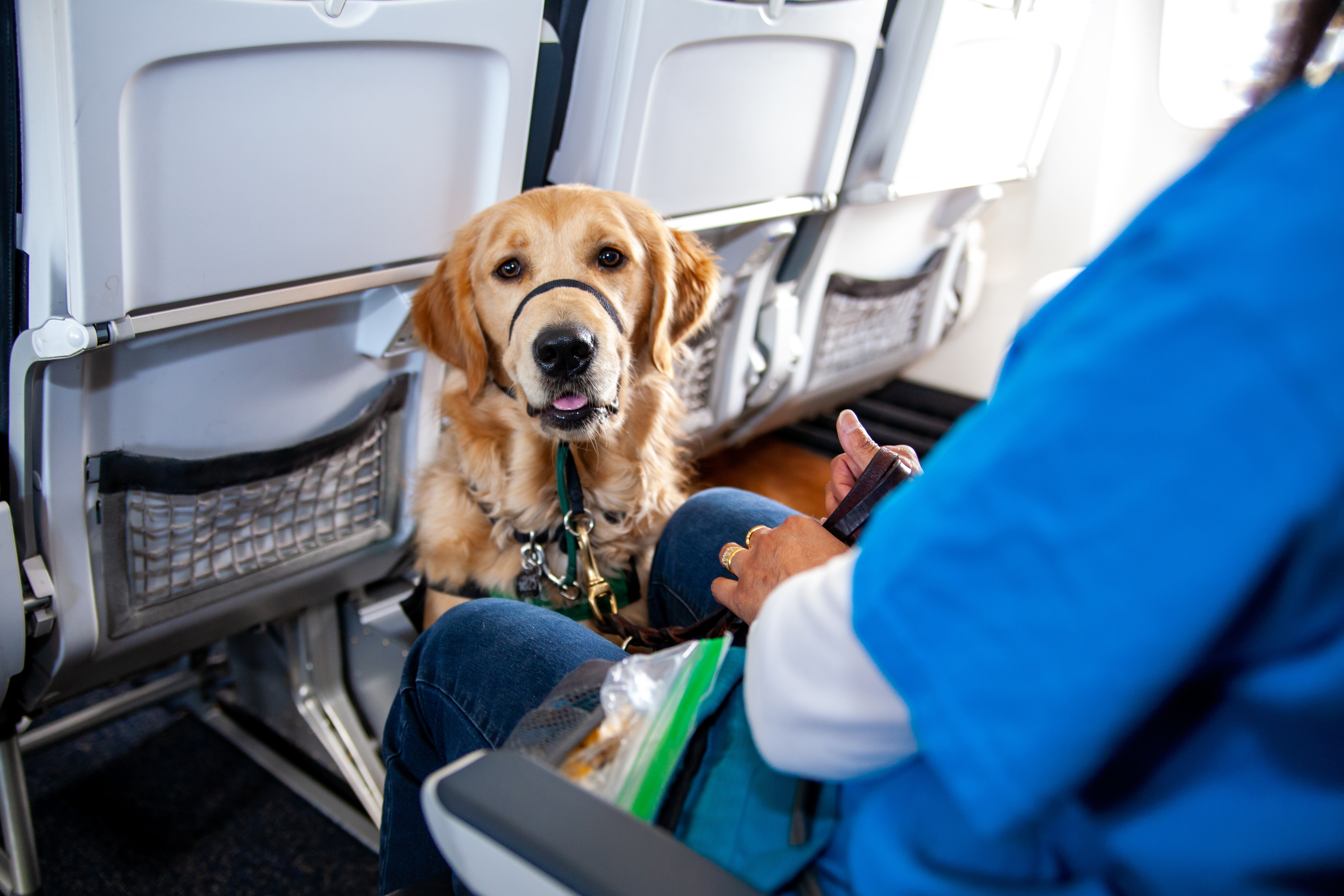
Service animals are trained to perform a task for their owner, usually to help with a disability; a guide dog is one example. They are not considered pets, since they perform a specific function rather than simply being companion animals. Because they assist their owners, they do not travel in a carrier; they occupy the space at their owner’s feet and travel free of charge. Depending on the airline, proof of the animal’s training may be requested.
Emotional Support Animals
Emotional support animals have no specific training and are needed by passengers who suffer from anxiety or certain phobias. Emotional support animals are not regulated in Mexico, so whether they are accepted may vary from one airline to another. When accepted, there is no additional charge and they can usually travel on the owner’s lap.
In the United States, regulations recently changed, freeing airlines from the obligation to treat them the same as service animals. Therefore, if you are flying to the United States, your dog will be treated as a pet and must travel under the paid Pet in Cargo Hold or Pet in Cabin service.
Pet Relief Areas at Tijuana Airport
Tijuana Airport has set up Pet Relief areas inside the terminal. If you are traveling with your pet or service animal, you no longer need to leave the building for your animal to relieve itself. The Pet Relief area is located after the security checkpoint, in the corridor that connects both boarding lounges (See the Tijuana Airport map). Animals must be kept on a leash when using these facilities.