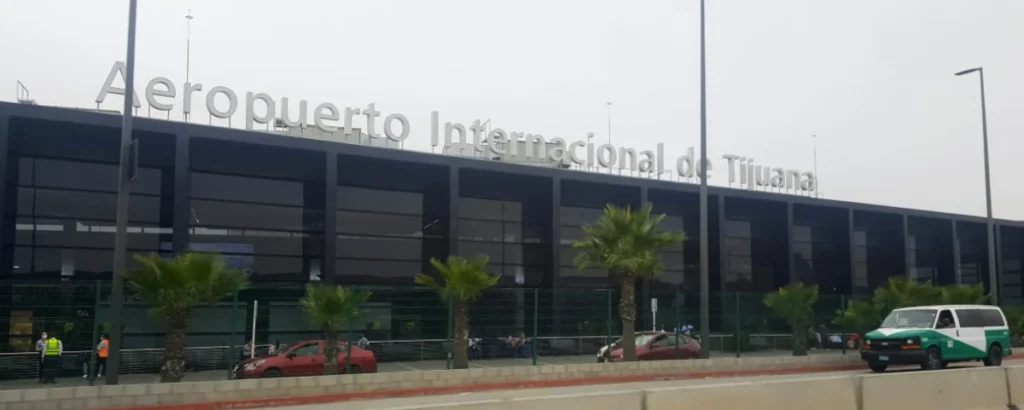
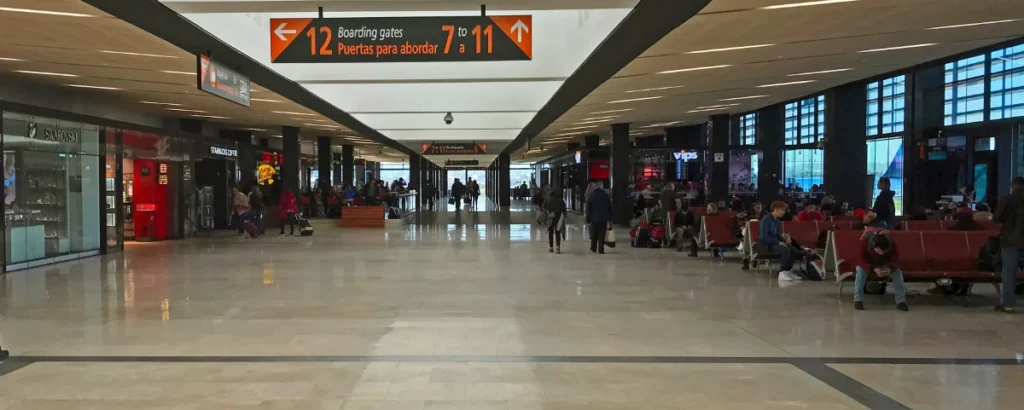
The Airport Use Fee (TUA) is a charge that all airports apply to all passengers over 2 years of age (with few exceptions) for the use of their facilities.
Under other names, similar charges are levied on passengers by airports around the world. The TUA is often considered a tax because payment is mandatory; however, the money collected does not go to the government, so it is really a payment for a service that must be paid by the end consumer.
The TUA allows airports to raise funds for the operation, maintenance, improvement and expansion of the airport facilities used directly by passengers. That is why, depending on the services an airport offers and taking into account its improvement and expansion plans approved by the aviation authority, the TUA is authorized by the Ministry of Communications and Transportation for a set period (usually one year). It is also worth noting that the same airport charges different fees for passengers traveling to domestic and international destinations, the latter being more expensive.
In most countries, including Mexico, airlines collect this charge from passengers and then pass it on to the airport. Currently in Mexico it is not possible to pay the TUA directly to the airport; it is always paid through the airline. In Mexico, the TUA applies only at the airport where the passenger starts their trip, not at destination or transit airports. In other words, if you fly from Mexico City to Tijuana with a stop or connection in Guadalajara, you only pay the TUA at Mexico City airport and pay nothing for using the Guadalajara and Tijuana airports. This assumes both flights are part of the same booking. If you have separate tickets for each flight, the TUA applies at the origin airport and at the connecting airport, but not at the final destination.
In recent years the TUA has drawn more attention from travelers, as several airlines have chosen to itemize this charge, making it more visible. By itemizing it, airlines seek to show the TUA’s impact on the final fare. However, itemized or not, the TUA has been part of the total price of an airline ticket for many years.
Among the changes by airlines that have accompanied the TUA’s greater visibility is the option some carriers now offer to defer payment of the TUA. Some airlines currently let you pay the TUA at check-in at the airport, unlike a few months ago, when it had to be paid when buying the ticket. However, if you choose to defer the TUA, it must be paid at the airline counter at the airport before the flight departs.
Although one might think that, besides the use of airport facilities (public areas, departure lounges, restrooms), the TUA also covers other services associated with a passenger’s time at the airport (jet bridges, boarding buses, baggage screening, passenger security screening, etc.), this is not the case. All of those services are paid by the airlines. In other words, the TUA only covers the use of the airport’s most basic facilities. With this in mind, travelers can judge whether the condition of each airport’s facilities and the services offered justify the TUA they pay. If you think they don’t, you can make a suggestion or complaint directly to the airport and, if you believe the airport is failing in its responsibility to provide quality service, even file a complaint with PROFECO.
TUA at Mexico’s main airports
| Airport | TUA domestic route | TUA international route |
|---|---|---|
| Cancun | 225.01 MXN | 665.20 MXN |
| Mexico City (AICM) | 606.21 MXN | 1229.98 MXN |
| Mexico City (AIFA) | 284.55 MXN | 526.37 MXN |
| Ciudad Juarez | 634.38 MXN | 880.64 MXN |
| Guadalajara | 487.20 MXN | 1145.00 MXN |
| Leon (Bajio) | 454.72 MXN | 1045.44 MXN |
| Los Cabos | 396.72 MXN | 1132.56 MXN |
| Merida | 528.00 MXN | 849.74 MXN |
| Monterrey | 596.44 MXN | 1267.96 MXN |
| Puerto Vallarta | 429.20 MXN | 1132.56 MXN |
| Tijuana | 469.80 MXN | 417.14 MXN |